Gussets and GodetsJanuary 16, 2026 Gussets and godets are interesting little devices that can have a huge effect on your garment's fit and hanging, and even add a fashionable flair. What I think I love about
these little gems is how much fabric you can save. They are so much more economical to cut, and lately I've been shopping in my stash and have to do with whatever I have, because to order more would be like. So let's look at these little darlings a little closer. Gussets
Gusset is defined: a small, triangular piece of material inserted into a shirt, pants, etc., to improve the fit or for reinforcement.
The word origin: (I always like to
see where it came from to get even a better meaning of the word) 1375–1425; late Middle English < Old French gousset, derivative of gousse pod, husk.
So from the entomology, the word means strength or to strengthen. And gussets do do that in spades. Most often, a gusset is inserted for strength and durability. The thinking is that the extra space can help in an area that would otherwise be
under a lot of stress, as it increases the range of motion.
This is the great ad that says more than I can about what gussets can do. This tells you that these are inserted in areas where you might need more range of motion, such as the crotch of pants and the underarm of sleeves.
But just as
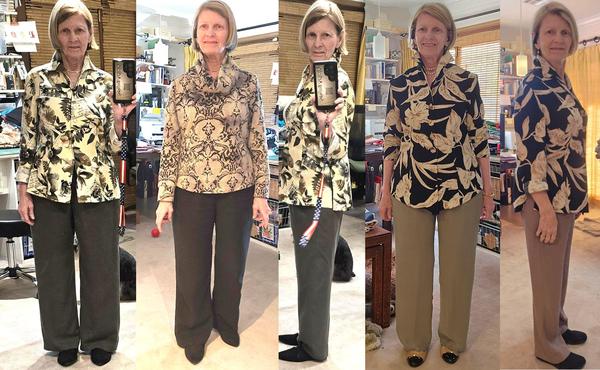
importantly (and, in my mind, a key part) is that it makes my pants hang beautifully in the back and the front, thanks to this gusset insertion. Not only are they more comfy, but they have a beautiful hang.
And lately it's saved a length of fabric that I would otherwise not been able to use.
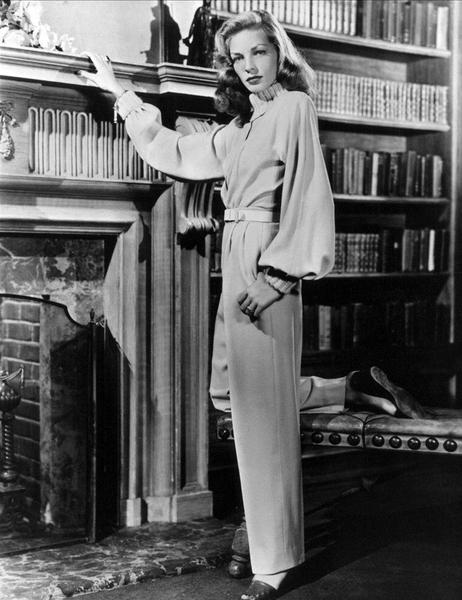
I truly could not be more pleased with the hang of this pant. Now here's the truth on this. This requires a whole different way of thinking. And it's not like I'm asking you to walk across the Pacific Ocean. This isn't that hard.
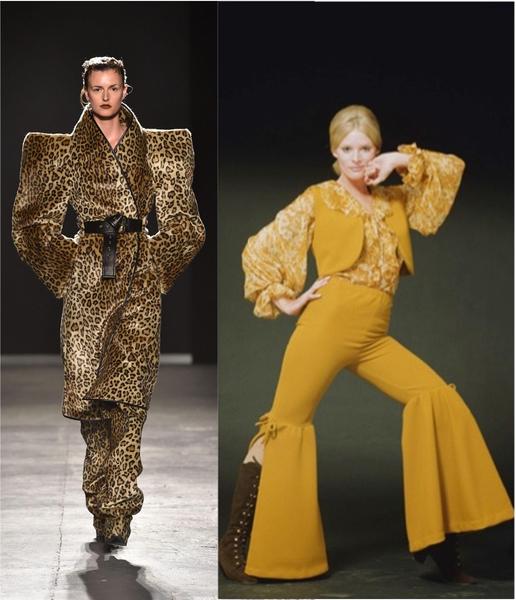
And all we have to do is turn back the time machine, and remember that once upon a time, shoulder pads were rivaling the defensive front line of professional football, while the bell-bottoms were so extreme it was like wearing mini-full skirts on each leg. These styles were so absurd and ridiculous, but we thought they were not so exaggerated because this was the style back then.
The main obstacle to our thinking about a pant that has ease and hangs well is that
it looks baggy. Would you call this baggy?
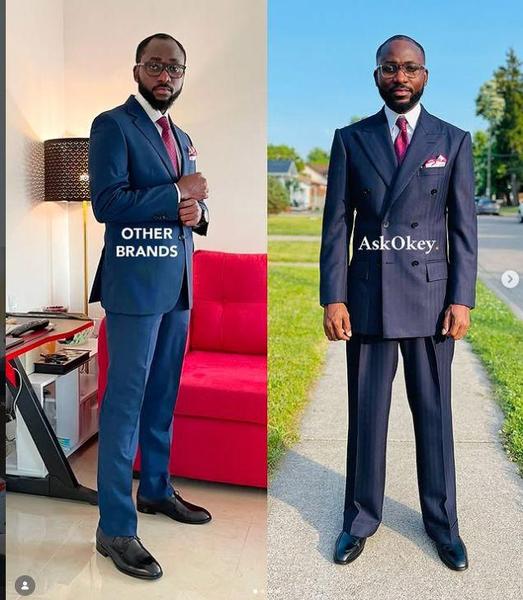
Not really, because look at the hang on this pant. We ladies aren't the only ones going through all this problem with ease and drape. The men are going through it too.
Most people look at this and think that the suit on the left is fashionable, but for a younger, less-educated person. While the suit on the right sends signals of maturity, professionalism, experience, and being at ease with himself. If you were going
to hire an attorney, accountant, or financial advisor, any of those would be dressed like the fellow on the right rather than on the left.
Personally, I see a suit that is way too tight and misfitted on the left, and the proportion of the thinness relative to the shoe doesn't work at all. While the proportions of the pants legs and the shoe on the right are spot on. So, back to the straight-hanging pant, you can also see that I'm doing a half break on the pant leg. Having the hem at the floor means having a half break on the instep (upper part of foot), which is natural, and I like the length it gives me
when I wear these pants.
But lately there's been more to the gusset than just saving the drape of my pant. It's saved a length of fabric that I would otherwise not been able to use.
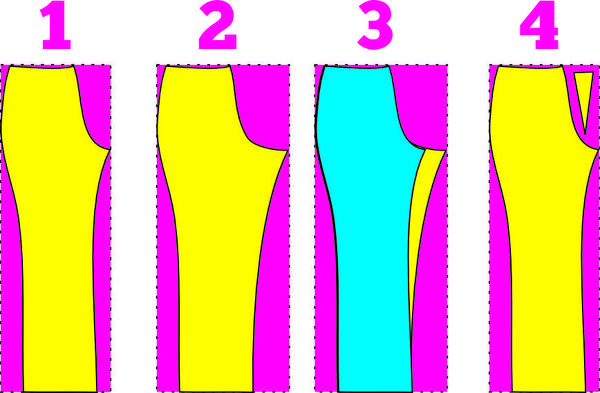
You can easily see what happens between 1 & 2, and the colossal waste of fabric on 2 when you extend the crotch in the pattern. Combine that with the front opposite, and you could fit a waistband, pockets, and other things in that space if you didn't
have that extension out. So in #3, this shows the extension (in yellow) and what happens when you take that piece out (and you do not need to make it as long as it is in #3) and add it as a gusset, and you can get pockets and all that other stuff in that space AND you won't need another ¼ or ⅓ of a yard to do it. For me, when I buy pants, it's 1¼ yards, so that's what's in my stash. This gusset means that I can not only cut out a pair of pants with what I have, but they will be comfortable, fit, and hang well. The fit is nice, but it's the hang that I love. That's what makes these pants look so
spectacular without being a problem by using so much fabric. So much that I have to stagger the pants that I need another ¼ to ⅓ yard of fabric.
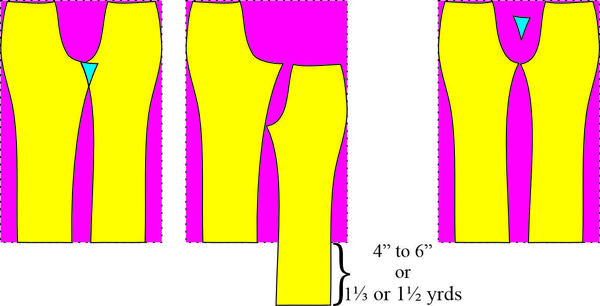
Taking that little turquoise triangle out (overlap in the left pic) and making it a separate piece (right pic) means that I can get the full pant let out of the width without having to stagger the leg (middle pic). And this is in a place no one will know,
because as quiet, quality ladies, we keep our knees together and aren't twerking the public!!!!!! Yeah, my twerking is not a visual sight that we want to visit, besides the fact that I would probably throw my hip out of joint.
As well as the gusset in the crotch of pants, you can have a gusset
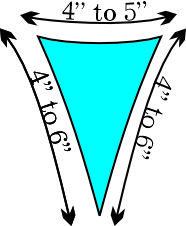
This is easier than you think. The length of the gusset can depend on your own shape. The more bulk you carry in the area just below your fanny to your knee, the better it determines the best fit and drape for your pants. The more bulk, the
longer the gusset, although I would not make it any longer than half the distance from the top of the inseam (bottom of crotch) to the knee. You don't really want the gusset to show, so anywhere from 4" to 6" should be long enough. If you need a gusset longer than that, consider widening your whole pant leg. The width doesn't need to be much either. It should be between 4" or 5" at the top
This is what works for me. I have very broad hips and immediately below my fanny I go to very thin thighs. My upper thighs and lower fanny is where my bulk is. So I don't need much length in my gusset. If you carry your bulk in your upper
hips and not much in your fanny, then your gusset might need to be wider and longer. This is more of a trial and error thing. When I'm
making pants for my customers, I'm constantly checking the hang in the lower crotch and upper thigh areas. This is a funny area because you're fitting the girth of the hips, (which is one measurement) and the girth of each thigh (which are the right and left thigh)trial-and-error, so there's two measurements there. The hip girth doesn't count the inside of the thigh, but the thigh measurement does. That means that the hip measurement may be 42", but each thigh might be 25".
25 + 25 = 50, which is too big to fit inside the hip measurement. You don't count the inside girth in the hip measurement, but you have to count it in your thigh measurement. And on top of that, it has to hang correctly, which means it drapes from the largest point on your fanny, hip, thigh, and stomach to the hem, with no break, tilt, bowing, or splaying.
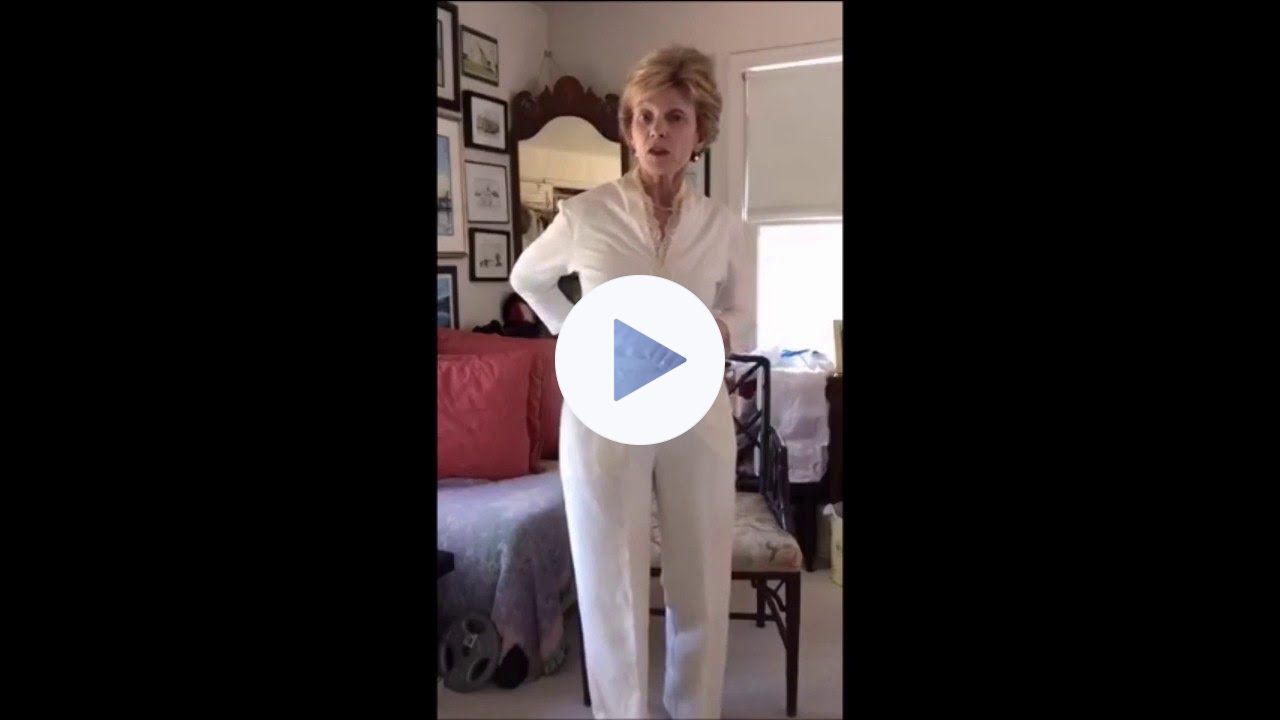
That sounds horribly complicated, but it's not. This is a video I did about 25 years ago that
shows how I fit my clients. I start with a pant that is cut to their hip measurement (remember I'm adding 2" ease in there), and then I make it straight to the waist, and I add 6", 10", 15" - whatever it takes to cover the fanny and stomach. If it comes up too high, I don't care. It needs to be high enough so that we can play with it and fit it.
Here's the video:
I wanted to keep this to gussets, but you can't help getting into a little bit of pants when you're dealing with gussets.
If a little tiny gusset can make the difference in comfort, fit and hang, it's worth it. But it has this wonderful ability to save you yards and yards of fabric as well.
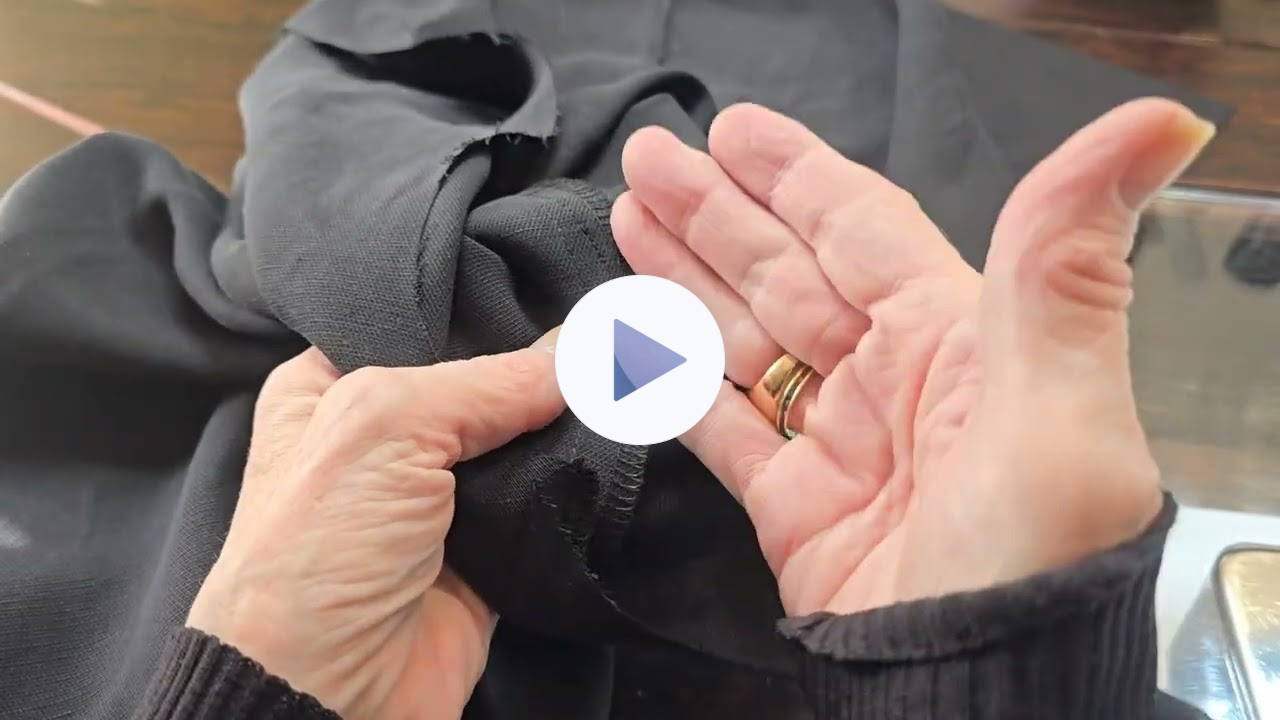
Here's a short video on some of the insertions techniques I use, and in
particular, what to do when you get that awful bump in fabric at the apex of the godet or gusset.
Gusset and Godet are both French, but the French pronunciation didn't quite make it through the way the Godet pronunciation did. The word is go-day'. In French, you never pronounce the last letter (which always made me ask, "then why is it
there?" but languages aren't about reason!)
But Godets (which is pronounced go-days' which defies the last letter rule in French, but it is what it is!), are mostly design mechanisms. While gussets are for comfort, durability and more practical reasons, the Godet is for design and frou-frou reasons! They also lend a very gentle line that any other form of fullness can't do. Well, it can, but the cut is very expensive.
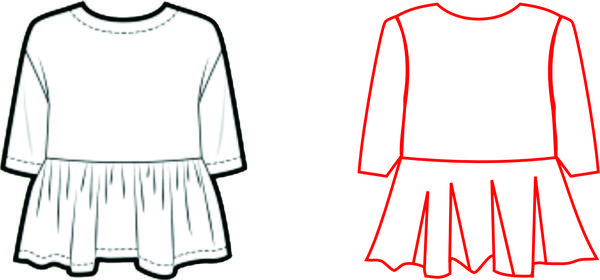
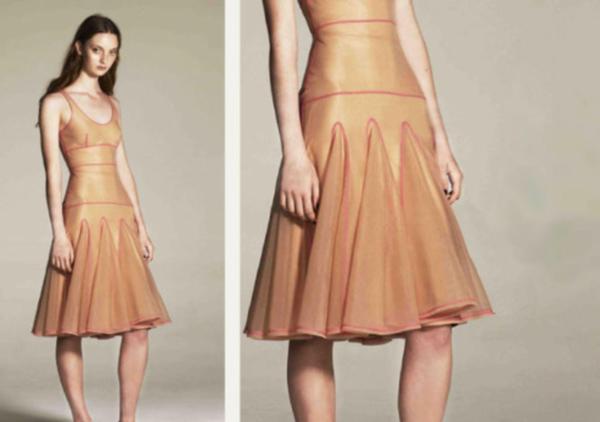
Here's a perfect example - the gathered version on the left has a lot of fullness just below the hip. But what happens if you don't like that (I don't like it for me since my hips are already full)? But the version on the right has a very soft line
because the hem fullness is still there, just not around the hip.
This gives you ultimate control over exactly where to add fullness and where you don't want it. This sort of exactness is one of the benefits of godets. Godets allow you to add fullness where you want it and to the extent you want.
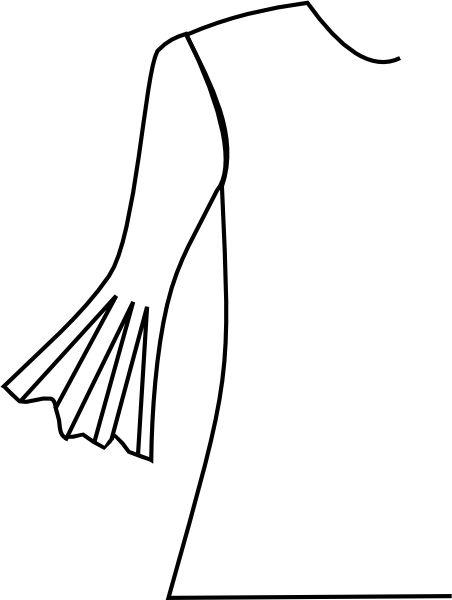
Here's a trumpet sleeve, without the seam in the sleeve to add another piece. And this sleeve is a very frugal cut. You simply take the sleeve, slash 6 or 8 cuts to the same line from the hem of the sleeve, insert 6 or 8 Godets, and poof, you have a
trumpet sleeve that has a gorgeous movement and fullness at the hem, but a gentle silhouette of the sleeve. My favorite use of the godet is
for a skirt.
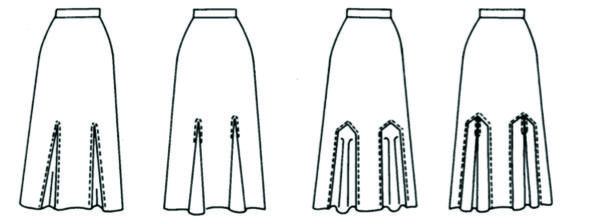
Each skirt has a very gentle silhouette and yet fullness at the hem.
Here's what that looks like. So this is trim and slim to the hip area, but full at the hem. To get this without Godets, you'd probably need about 6 or 8 panels, and each one would be a costly cut of the fabric, since you could fit only two pieces on
one width. If you had eight panels, that means the skirt would take four lengths to achieve this fullness at the bottom. With Godets, I would cut a straight skirt, then add those Godets (which might take another length of Godets, not the skirt), insert them, and have a much lovelier cut.
But more than that, the Godet makes for a very smooth, nicely moving garment at a reasonable cost.
There is a secret here and it's easy to remember, and once you know it, Godets go in like magic.
The first secret to remember here is to always begin sewing from the wide part to the thin part. In the case of our Godets in a skirt, that would
be from the hem to the waist. This way, you are sewing with the grain, and you will have less rippling. I've even seen RTW sewn poorly, and this is such a basic and easy rule to follow; it shows the garment's really poor quality when those seams are not sewn in the correct direction.
Next, I like to think about which way I'm going to press the Godet. You want to always press it toward the Godet center. That the first Godet seam.
The
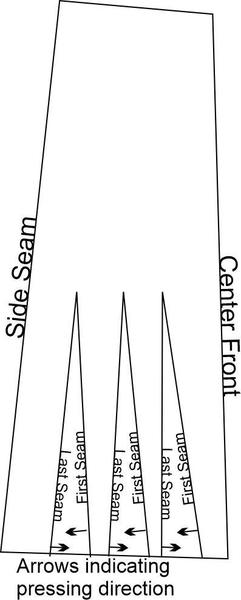
second seam will be pressed toward the center front or the center back of the skirt, if the Godet is in a seam. If it's not in a seam, then you act like the Godet is sewn into a dart or slash in the fabric. But your seams should always press into the Godet first, and then toward the center front or back. That means the first seam in a Godet will press toward the side seam, and the last one will press toward center front or back.
This is how this would look - the first seam (from hem to almost the top of the Godet) is pressed toward the side seam. The last seam is pressed toward the center front, but both seams are pressed toward the center of the Godet. This makes the Godet
lie flatter at the top.
The secret here is to treat the last seam of the Godet as a single seam with a curve at the top of the Godet. Don't treat it like a separate piece.
With a little practice, godets and gussets can be inserted easily, and once you know some of the problems with insertion, you can avoid them (or fix them) like a pro. Most of all, they can add a beautiful line to a garment, or simply make for a fantastic hang of your pants. And
then they are also a much more economical way to cut pants.
This is one of those unsung techniques that ads just another tweak to your fitting, comfort, hang and usefulness to your garments. The provide fullnes right where you need it without affecting the line or shape of the garment all that much.
|
This is a sad day - the loss of a classic tradition. Armani held the line
to fashion style that ...
Tracking a fashion trend isn't all that hard after seeing a few of them.
Living from Mid-Century Modern through Twiggy...
It's worth the time to look at these styles, particularly today as
there is a group of that wants to look....
This is the way fashion used to be -- pretty, flattering and I can't wait to make some of...
NOTE: There are some folks who can't get my email, or it's sporadic, or something is hinky. I will always respond to any of you who send a private message, whether it's about the topic of the week or something else. If you don't get anything
from me, it's probably because the [email protected] email is blocked, and even a private message can't get through. In that case, I'm on Instagram often, and you can always PM me at @sewingartistry.
As a precaution,
please ensure I'm in your email Address Book and check your spam, junk, and trash folders. Some email clients get extra excited when they see emails coming into the Inbox that go to many other receivers. They automatically think it's trash or spam, and it never makes it to the Inbox. I must constantly check my spam and junk folders to ensure I'm getting the emails I subscribe to.
To view in browser along with past emails, click here. We respect your email privacy. |
|
|